



For four long years, Serena Williams was but a cherished memory at Wimbledon. However, on Tuesday night, she graced Centre Court once more, making nostalgia feel vividly alive.
With headphones on and her gaze steady, Williams didn’t make a grand entrance with flashy attire or extravagant gestures. Instead, the crowd erupted in a thunderous standing ovation, celebrating the return of the seven-time Wimbledon champion to singles competition.
What truly stood out was how seamlessly Williams slipped back into her role on Centre Court. During the warm-up, her serve and groundstrokes exuded effortless power. It didn’t take long before her age—44 and absent from singles play for four years—was but a footnote; the audience was simply watching Serena.
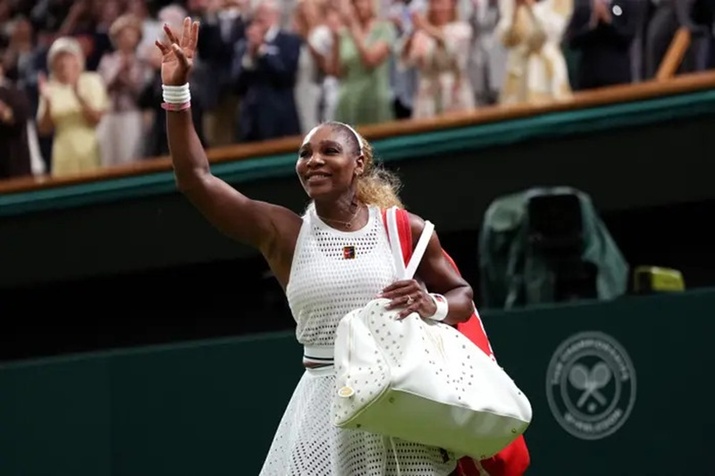
BSR Agency / Getty Images
Her opponent, Maya Joint, proved to be equally formidable, exhibiting remarkable composure as she absorbed Williams’ intensity and skillfully redirected shots from near the baseline.
The 20-year-old Australian, currently ranked No. 87, achieved the most significant win of her career, toppling the 23-time Grand Slam champion with a scoreline of 6–3, 6–7(8), 6–3 after two hours and 22 minutes to advance to the second round.
Joint carried herself with confidence, never showing signs of intimidation. Her two-handed backhand often dictated pace and direction, catching Williams off-guard on several occasions. Many electrifying rallies surged through the center of the court, with Joint frequently emerging victorious.
She also outpaced Williams in aces, 10 to 7, landed 40 winners compared to Williams’ 26, and concluded with 115 points won against Williams’ 103. Although both players encountered 37 unforced errors, Joint excelled at seizing pivotal moments.
While Williams showcased her remarkable serve and smashing forehand winners, her movement sometimes revealed the impact of her four-year hiatus. She unleashed her signature serve out wide, dazzled with sharp-angled forehands, and executed swinging volleys. In heated moments, she exclaimed, “Come on!” Yet, Joint consistently pressured her forehand, compelling Williams to strike in tight spaces. There were brief stumbles—a poorly timed swing, a couple of unwelcome double faults, and a backhand misfire that elicited a frustrated gasp—but these felt more like minor bumps than a lack of belonging.
Joint served resolutely, saving two crucial break points before clinching the first set 6–3. Williams fought back in the second set, saving a match point and edging a thrilling tie-break 10–8, compelling a third set.
“I really can’t find the words right now,” Joint expressed during her on-court interview. “Honestly, I’m in disbelief.
“I barely slept last night, up until 2 a. m. just thinking. Walking out, I just blanked on the warm-up. I can’t explain how this happened.
“My legs felt heavy. I don’t really know how I managed to start off strong. Serena’s aura is just so powerful; she’s a true legend.
“So many greats have graced this court. I’ve dreamed of this moment since I was a child; it’s surreal.”
After almost letting match point slip by in the second set, Joint regrouped brilliantly. Serving for the match once more in the third, a double fault marred her first match point, but she quickly responded with a powerful ace. Williams’ return went long on the next chance. With arms raised in disbelief, Joint celebrated, while Serena approached the net, smiling and offering warm congratulations.
“The toughest aspect was stepping out onto the court against her,” Joint remarked. “The nerves at the start were intense. Finishing the match was equally challenging; she definitely elevated her game.”
After securing the most significant victory of her career, Joint will face the 29th seed, Alexandra Eala from the Philippines, in the next round.
Although Williams’ singles comeback ended in defeat, her Wimbledon journey isn’t yet over—she will partner with her sister Venus for doubles competition.